
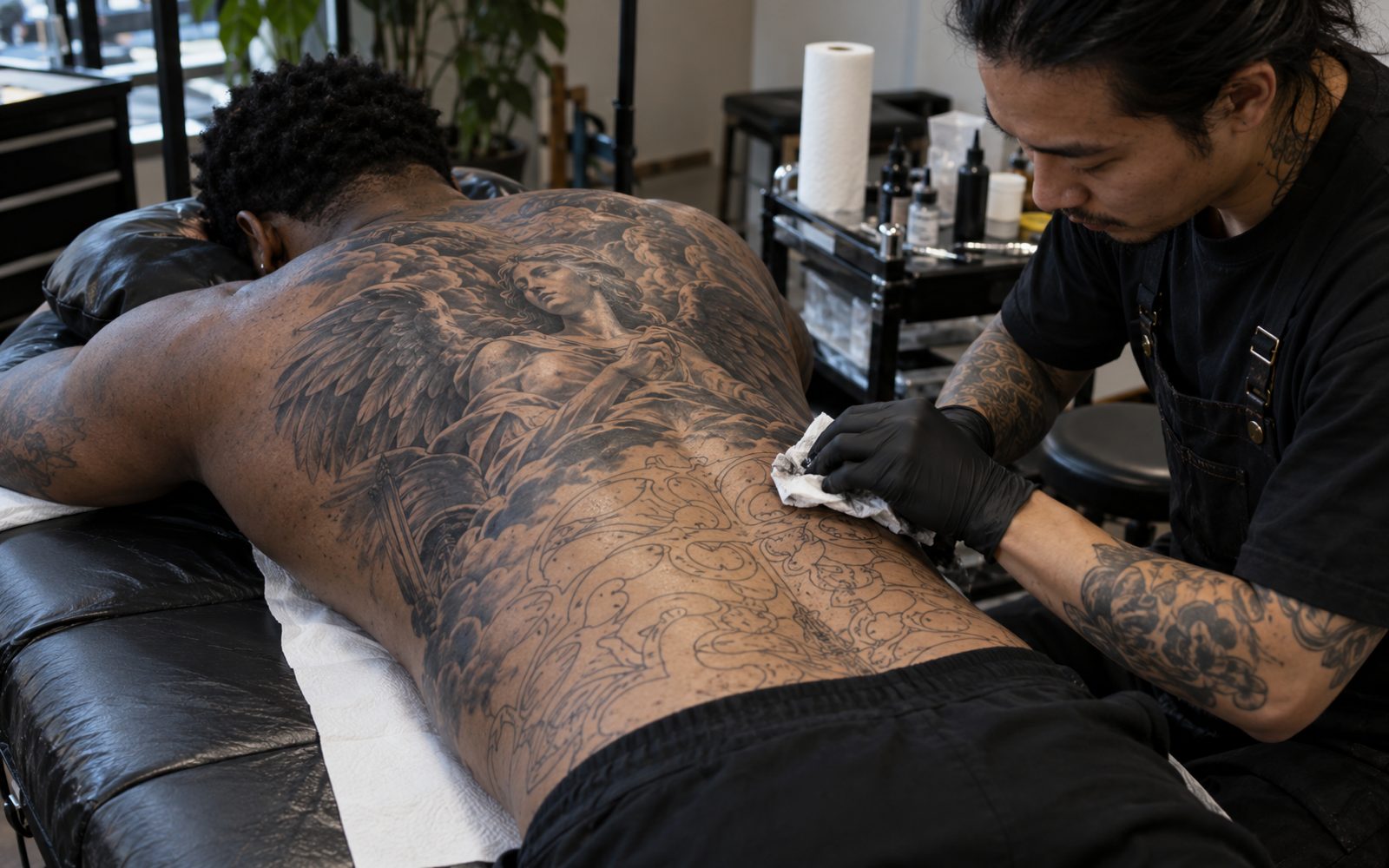
When a client asks to pay in pieces
It usually comes in as a text after the consult: they love the design, they want the whole back, and they can't pay $1,800 this month.

That's normal. A back piece is booked across months, so the payments can be too. Agree on the split before the first line goes down, write it into the booking, and take each payment by card so nobody has to remember who owes what.
The client texts your booking line. Your Assistant turns the message into a structured request and drafts a reply with the split. You read it, change the numbers if you want, and send it. Nothing goes out until you send it.


Flexible deposit percentages
The deposit percentage is your call. On a large piece the deposit does two jobs: it holds three dates on your calendar and it pays for the drawing time before session one.
In the example, the deposit is 20% of $1,800, so $360. Pick a higher deposit percentage for a long wait or a lot of drawing, a lower one for a regular. Write it into the booking so the client sees it before they pay.
Every card payment carries one booking fee, deposits included. It covers card processing, and nothing comes off your price. The client pays it by default. Small payments hit the $2.50 minimum: a $20 deposit on Free carries a $2.50 fee, not $1.98.
For a back piece, turn on approval-first booking. You see the intake form, the reference uploads and the 2D/3D placement before any deposit is taken.
You keep the full $360.
Scheduling the installments
Tie each installment to a session, not to a calendar date. The client pays the next part when they sit down for the next session. If a session moves, the installment moves with it, and nobody has to rework a payment plan.
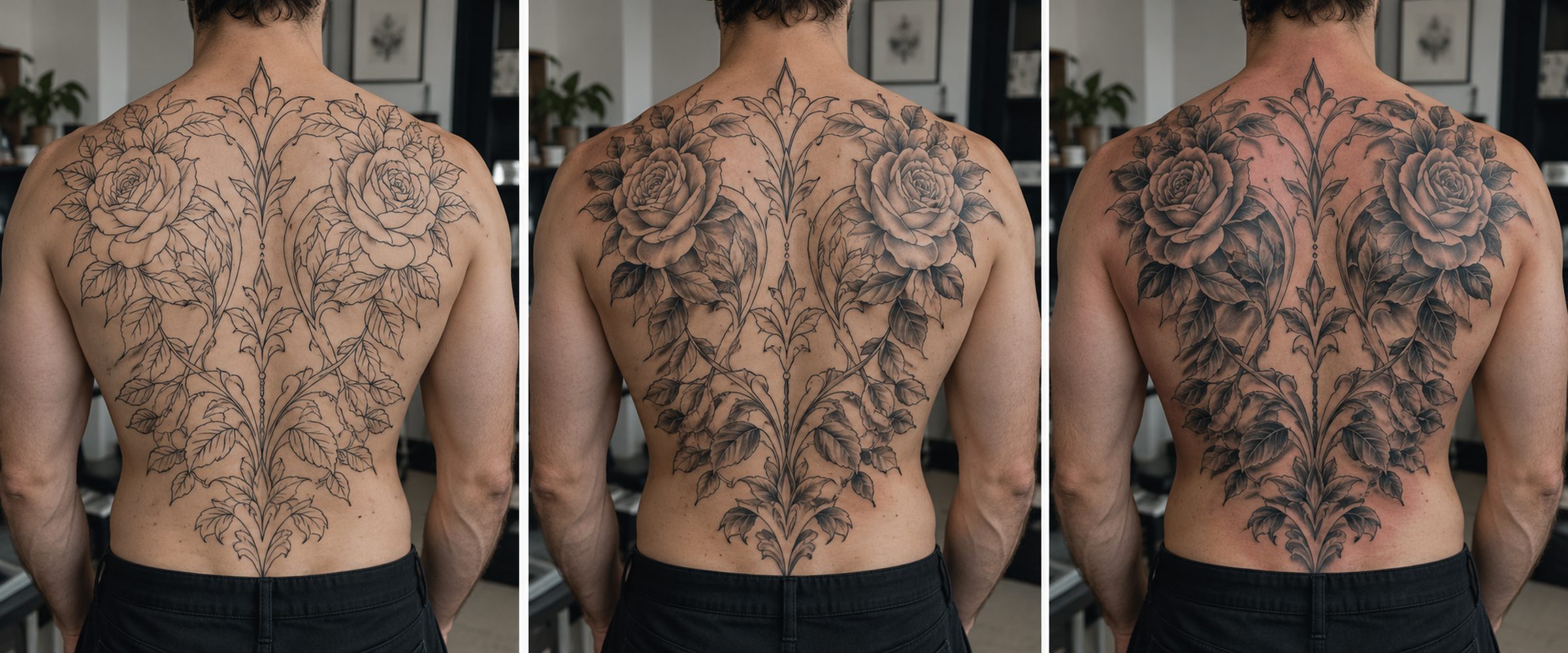
Book all three sessions up front. Long gaps are normal on a back piece while the skin heals, and holding the dates early keeps the piece moving. With Google Calendar 2-way sync on, all three sessions land in your calendar too.

Card payments go straight to your bank, deposited daily, next business day. The client's payment going through and the money reaching your bank are two separate events, so don't plan rent around the minute the card clears.
Installment 2 ($720) is paid at session 3.
Balance reminders that are not awkward
The awkward part of a payment plan is the conversation, not the money. Nobody wants to text a client about money while their skin is still healing.
You don't have to. Every booking sends reminders by SMS and email: 2 days, 2 hours and 30 minutes before by default. On a back piece, add the 7-day reminder too, so the client has a week to get the next installment ready.

When they reply with a question about the balance, your Assistant drafts the answer from the booking. You check it and send it. The reminder goes out on its own, so you never have to start the money conversation.
- 7 days beforeSMS + email · added
- 2 days beforeSMS + email · default
- 2 hours beforeSMS + email · default
- 30 minutes beforeSMS + email · default
1 day before is also available.
 Maya is in 7 days. Reply here if anything changes.
What the artist sees
Tracking a payment plan in your head works for one client, not for a full book. The booking keeps the record: what's paid, what's due and the balance left.
After session 2, the deposit and installment 1 are paid and $720 is left. The $100 tip from session 2 is kept separate from the plan: tips never carry a fee and go 100% to you.
Running a shop? The owner report shows each artist's week, and invoices and payouts are in one place, so you can follow a back piece on any artist's books.
Maya Rivera Example Back piece · after session 2
Lifetime counts the deposit, installment 1 and the $100 tip.
The same back piece on each plan
Every plan has every feature, card processing included. Plans differ only in the monthly price and the booking fee. These are the fees on the full $1,800 (the $360 deposit and two $720 installments), paid by the client.
Prefer to share it? Split the fee 50/50 and a $720 installment on Plus costs each side $16.20. Or pay it yourself. Your price stays $1,800 either way.